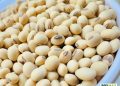


This US harvest season is proving to be one of the most turbulent in recent years for farmers. China, the world’s largest soybean importer, has completely halted its purchases from the US. This sudden decision has led to plummeting prices in agricultural regions, overflowing warehouses, and putting many farmers at risk of losing their livelihoods.
However, this development is not solely a result of trade wars. According to experts, the structural weaknesses of the US agricultural system have become more apparent today as a result of political actions taken years ago.According to 2024 data, soybeans were the US’s number one agricultural export, with a value of approximately $24.5 billion. More than half of soybean production was exported, with half of this export going to China. Therefore, the withdrawal of a single buyer from the market disrupted the entire system.
China’s shift to sourcing soy from Brazil and Argentina instead of the US demonstrated the fragility of this dependency. Furthermore, China’s 40 million-ton strategic reserves put significant pressure on global prices, forcing US farmers to sell below cost. As US farmers struggle under economic pressure, the Washington administration’s $20 billion in support for Argentina has sparked outrage. Officially aimed at stabilizing global markets, this support has effectively strengthened rival countries for US producers.
Following this support, Argentina lifted its export tariff and sold more than 1 million tons of soybeans to China. This situation has exposed the contradictions in US agricultural strategy: policies are being implemented to strengthen foreign competition while its own farmers are struggling. For the third time in a year, the US Congress is debating a farmer aid package. These aid packages are generally provided through Commodity Credit Corporation (CCC) funds or new budget allocations. However, these aid programs exacerbate rather than resolve structural market problems.
Between 2018 and 2024, the US government distributed $28 billion in aid to mitigate the effects of trade wars. However, almost all of these funds were directed at major commodity crops such as corn, cotton, and soybeans, while fruit, vegetable, and other food-focused producers were excluded. While these aid packages provide short-term relief, they also increase land and input costs in the long term, forcing farmers to constantly rely on new aid. Since 2014, agricultural safety net payments in the US have exceeded market losses by $88 billion, increasing farm asset values by 52% and debt ratios by 73%.
The current situation is a consequence of political steps taken years ago. The 1996 Freedom to Farm Act eliminated supply management and forced farmers into a “border-to-border” approach. This led to overproduction and price declines. The concentration of large agricultural corporations in production, input, and distribution chains has weakened farmers’ bargaining power. The focus of government support on a few crops has eliminated agricultural diversity and pushed producers into a debt spiral.
The US agricultural system today faces a serious paradox: While subsidizing animal feed products, the country has become dependent on imported food imports. A $47 billion trade deficit in agriculture is projected by 2025.
According to experts, the solution is not a new bailout, but structural reform. Organizations like Farm Action are proposing a new direction focused on food security and local production. Accordingly, the following should be done:
- Production of fruits, vegetables, and nutritious products should be incentivized.
- Subsidies should be restructured, and instead of continuous bailouts, programs that build resilience should be focused on programs.
- Investment should be made in local processing and distribution infrastructure.
- Competition laws should be enforced to combat monopolization in agriculture.
The soybean crisis is not just a trade dispute, but a warning about the unsustainability of the US agricultural system. A reliance on foreign buyers and continued government support can protect neither farmers nor the country’s food security. Experts say it’s time to break free from the cycle of overproduction and aid dependency. A resilient, diversified, and equitable food system is seen as the only lasting solution for the future of both farmers and consumers.