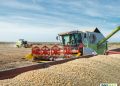


Soybean harvests across Michigan are nearly complete, with farmers finishing up their fields as drought conditions continue to spread across the state. Despite a smooth harvest period, yields have come in lower than expected due to late-season dryness.
In central Michigan, farmers began harvesting soybeans in late September, benefiting from several consecutive days of favorable weather. Many growers report that more than 90 percent of soybeans have now been harvested, allowing them to transition quickly to wheat planting and fall fieldwork before colder weather sets in.
While harvest operations proceeded efficiently, the lack of rainfall during August and September has taken a toll on overall yields. The dry conditions have also affected corn maturity, with many farmers waiting for grain moisture levels to drop before moving ahead with corn harvest. According to the latest U.S. Drought Monitor, more than 60 percent of Michigan is now experiencing some level of drought, including newly affected areas in the southern Upper Peninsula. The expanding dryness poses challenges not only for late-season crops but also for soil health and fall planting preparations.
Although U.S. Drought Monitor updates will continue during the ongoing federal government shutdown, the USDA’s weekly crop and condition reports have been suspended indefinitely, leaving farmers without timely federal updates.As Michigan farmers wrap up soybean harvest, attention now shifts to managing the lingering effects of drought and preparing for next season. The combination of strong harvest efficiency and weather-related yield pressures highlights the growing importance of adaptive strategies in the state’s agriculture sector.